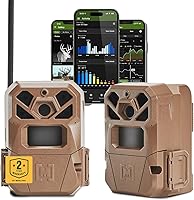
Are Trail Cameras Good for Home Security?
Yes, trail cameras can be good for home security in specific spots, such as a back gate, shed, or driveway without power. They fall short as a full alarm system, because slow triggers miss fast events and many models sit on a strap a thief can cut.
On this page (9 sections)
- Are trail cameras good for home security in a typical yard?
- Where does a trail camera fit into a home security plan?
- What are the real limits of a trail camera as a security camera?
- How do you mount a trail camera so it stays put?
- How do you stop a trail camera from being stolen?
- Do trail cameras work without Wi-Fi or power?
- Are trail cameras good enough for night security?
- When is a trail camera the wrong choice for home security?
- What should you check before buying a trail camera for security?
Yes, trail cameras are good for home security in a few narrow jobs, but they are not a straight swap for a doorbell or a wired home camera. They suit a back gate, a shed door, or a driveway that has no power, where a battery camera and a solar panel can run all month without wiring.
They fall short when you need instant alarms, continuous recording, or proof against a determined thief.
The reason is simple: trail cameras are built to catch animals, not people. Their trigger is tuned for a deer walking through a food plot, and many sit on a strap that anyone can cut.
Knowing where that trade-off matters is the whole decision.
Are trail cameras good for home security in a typical yard?
They are good for covering a specific spot you cannot wire, and poor for watching a whole house. A trail camera sees one framed area, often 40 to 60 feet wide, so a single unit covers a gate, a parking pad, or the side of a shed.
The typical yard job looks like this: you want to know who walks up the driveway after dark, or whether someone opened the shed. A trail camera on a tree or post does that without an electrician, a Wi-Fi router, or a monthly fee.
It records a short clip each time something crosses its detection zone and stores it on an SD card or sends it over cellular.
What it cannot do is cover the front door, the back door, and the driveway at once. For a full perimeter, a trail camera is a supplement, not the system.
Where does a trail camera fit into a home security plan?
The best fit is the remote or unpowered spot, the place a home camera cannot easily reach. Think of a detached garage, a horse barn, a long gravel drive, a gate at the edge of the property, or a rental you do not visit every week.
A trail camera also works as a cheap second layer on a spot you already watch. Put one on the shed door and a home camera on the porch, and you get two angles on the same approach.
The trail camera's own battery and solar panel keep it running if the house loses power.
It is a weak fit for the front entry. A person at the door wants a live feed and a two-way speaker, and trail cameras do neither.
Save the trail camera for the spots behind the house.
What are the real limits of a trail camera as a security camera?
The main limits are trigger speed, image quality at distance, and physical security. A trail camera's trigger often takes 0.3 to 0.7 seconds to wake and start recording, so a person walking briskly can pass the frame before the clip begins.
Home cameras start faster for a reason.
Night image quality depends on the flash. A low-glow infrared flash lights the scene but can show a red glow, and no-glow flash costs range.
At 60 feet in the dark, faces are often soft and hard to identify.
The housing is the bigger gap. Most trail cameras are plastic with a strap latch, and a thief can cut the strap or pry the door in seconds.
A camera that disappears takes the footage with it unless it sends clips to the cloud as it records. That is why the box and lock matter more here than in a food plot.
How fast does a trail camera need to trigger for people?
Look for a trigger speed of 0.5 seconds or faster, and shorter if the camera watches a path people walk. A driveway camera that fires in 0.3 seconds catches more of the approach than one that takes a full second.
Detection range matters too. A camera that senses motion at 80 feet but only lights 50 feet gives you a clip of a dark shape.
Match the detection range to the flash range before you mount it.
How do you mount a trail camera so it stays put?
Mount it above head height, tight to a solid tree or post, and angled down at the approach. A camera at eye level is easy to grab, and a loose strap is easy to twist.
The ORIPIK tree mount screws into a tree or post and holds the camera on a ball head. That lets you aim the camera down the driveway without wedging sticks behind it.
It fits cameras and solar panels with a 1/4-inch threaded hole, so check your camera's thread before you buy. A tight mount also cuts false triggers from wind sway, which matters when you want clean clips.
For the full mounting playbook, our guide on how to secure a trail camera walks through height, angle, and hiding the strap.
How do you stop a trail camera from being stolen?
Lock it in a steel box and cable the box to something fixed. A strap alone stops nothing, and a camera that walks away cannot help you.
The GardePro MB350 is an iron box with a lockable front that takes a padlock and a security cable. It is model-specific, so it fits the GardePro E6 2.0 Pro, E8 2.0 Pro, A80 Pro, R3 Pro, X66 Pro, X66 Pro Max, and X70 Pro, and no other GardePro model.
GardePro says the box is not built to survive deliberate violent damage, so treat it as a deterrent and a delay, not armor. It mounts on a tree, post, or wall with a strap or screws.
Our roundup of security boxes and locks for trail cameras compares the options if your camera is not a GardePro.
What cable lock works with a trail camera box?
A braided steel cable with a keyed lock is the usual pairing. The Master Lock Python 8417D is a 6-foot cable with a 3/16-inch braided steel core and a vinyl coating that resists rust and scratches.
It comes with two keys and a limited lifetime warranty from Master Lock. The adjustable lock holds the cable tight at any point, so you can wrap a trunk and still close the lock.
Run it through the box handle or cable slot and around a tree too big to cut quietly. Pair the lock with a solid mount and you have three layers: box, cable, and height.
Do trail cameras work without Wi-Fi or power?
Yes, and that is their strongest security feature. A battery trail camera with a solar panel runs where there is no outlet and no router, which is exactly where a home camera cannot go.
A cellular trail camera sends clips and alerts over the mobile network instead of your home Wi-Fi. That means a shed camera still reports when the house internet is down.
Check the carrier coverage at the spot before you buy, because a weak signal gives you late alerts.
Battery life depends on how many clips the camera takes and how cold the nights get. Cold drains cells faster, so plan a routine swap.
Our guide to trail camera batteries covers the cell types and what to expect in winter. If you are buying the camera itself, our roundup of the best trail cameras compares the models worth mounting.
Are trail cameras good enough for night security?
They are decent at night if you pick the right flash. No-glow infrared records without a visible light but has less reach, while low-glow reaches farther and shows a faint red glow.
Neither gives you a bright, clear face at long range.
Mount the camera close to the path, not 80 feet back. At 20 to 30 feet, a no-glow flash gives a usable image of a person.
At 60 feet, you get a shape and little more. For a gate camera, 50 feet of detection is plenty.
When is a trail camera the wrong choice for home security?
Skip it when you need a live view, instant two-way talk, or a monitored alarm. A trail camera sends clips and sometimes alerts, but it does not stream to your phone all day and it will not call the police.
It is also the wrong tool if the camera must stay on a wall in plain sight. A determined thief can take a plastic camera, and the box only slows them down.
A wired camera with a cloud backup is harder to defeat. Use a trail camera for the spots a home camera cannot reach, and a home camera for the door and the porch.
What should you check before buying a trail camera for security?
Check trigger speed, night flash type, cellular coverage, and whether a box fits your model. Those four decide whether the camera catches a person and survives the spot.
Also check the mount. A camera on a loose strap sways in wind and sends false clips.
A screw-in mount with a lockable box holds the aim steady. And check the app or plan for cellular models, since a camera that cannot send clips is only as useful as its SD card.
Our score for these picks weighs specs, features, and buyer feedback against what you are shopping for. Pick the MB350 if you own a matching GardePro camera and want an iron box.
Pick the Python cable to tie the box to a trunk. Pick the ORIPIK mount to aim a camera down a driveway and keep it still.
So, are trail cameras good for home security? Yes, for a remote gate, a shed, or an unpowered driveway, where a battery camera and a lockable box earn their keep.
No, for the front door or a full perimeter, where a home camera still wins. If you want the camera side first, compare models in our best trail cameras guide, then lock it down with security boxes and locks.
Frequently asked questions
Can a trail camera replace a home security camera?
No. A trail camera can cover a remote gate or shed, but a home camera is built for continuous recording, instant alerts, and two-way talk.
Use a trail camera where there is no power and accept gaps between clips.
Do trail cameras work at night for security?
Many trail cameras have a low-glow or no-glow flash that records in the dark. Check the trigger speed and detection range in the specs, because a slow camera can miss a person who walks past before it starts recording.
How long do trail camera batteries last?
It depends on how many clips the camera takes, the flash type, and the temperature. Cold nights drain cells faster, so check the battery type in our trail camera batteries guide and plan a routine swap.