9 Best Trail Cameras for Deer Hunting (October 2026)
The best trail cameras for deer hunting include the Moultrie Edge 3 Cellular Trail Camera 2-Pack for two-route cellular scouting, the Tactacam Reveal X 3.0 Cellular Trail Camera for simple cellular activation, and the SPYPOINT Flex-M Twin Cellular Trail Cameras for spreading cameras.
On this page (7 sections)
- How we chose the best trail camera for deer hunting
- Compare the best trail cameras
- The best trail cameras for deer hunting
- How should you choose a trail camera for deer?
- How do you set up a deer trail camera?
- What mistakes make trail camera scouting less useful?
- Which trail camera is best for your deer hunting setup?
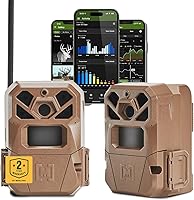
The Moultrie Edge 3 Cellular Trail Camera 2-Pack is the best trail camera for deer hunters who want two viewpoints and app alerts. Cellular cameras can reduce trips to the woods, while a local SD-card camera keeps the routine simple when you can visit the site.
For remote scouting, consider the Edge 3 or Tactacam Reveal X 3.0. Choose the GardePro E5S for local card checks, and the SPYPOINT Flex-S Dark when built-in solar charging is a priority.
If you're comparing camera types, start with our plain game camera buying guide. For plans, carrier coverage and remote delivery, see our guide to cellular trail cameras, carriers and plans.
Our picks at a glance
-
1
 Best for two-route cellular scouting
Moultrie Edge 3 Cellular Trail Camera 2-Pack
9.2/10 our score
See it on Amazon -
2
 Best for simple cellular activation
Tactacam Reveal X 3.0 Cellular Trail Camera
9.0/10 our score
See it on Amazon -
3
 Best for spreading cameras
SPYPOINT Flex-M Twin Cellular Trail Cameras
8.8/10 our score
See it on Amazon
- 4
 Check it
GardePro E5S Non-Cellular Trail Camera
Best for local card checks - 5
 Check it
Moultrie Edge 2 Cellular Trail Camera
Best for app-based pattern review - 6
 Check it
Tactacam Reveal Ultra Cellular Trail Camera
Best for live remote viewing - 7
 Check it
Meidase P70 Non-Cellular Trail Camera
Best for on-camera photo review - 8
 Check it
SPYPOINT Flex-S Dark Solar Cellular Camera
Best for built-in solar charging - 9
 Check it
MAXDONE Solar WiFi Trail Camera
Best for nearby phone downloads
How we chose the best trail camera for deer hunting
The best trail camera for deer hunting depends on where you plan to place it, how often you can visit and whether you need remote updates. We compared connection type, storage, power options and useful scouting features against those needs.
Cellular models stand out when app access, location features or multiple-camera packs can save a trip. Local cameras are a better match if you can retrieve an SD card and would rather avoid cellular service.
Compare the best trail cameras
These picks cover cellular, SD-card and short-range phone connection setups. Start with how you'll retrieve photos, then check the power and storage requirements for each camera.
| Product | Best for | Connectivity | Imaging | Power | Our score |
|---|---|---|---|---|---|
| Moultrie Edge 3 Cellular Trail Camera 2-Pack | two-route cellular scouting | Cellular, four-carrier auto-connect | 40MP photos, 1080p HD video | Compatible with EDGE Series lithium battery packs and solar panels | 9.2 |
| Tactacam Reveal X 3.0 Cellular Trail Camera | simple cellular activation | Cellular, AT&T and Verizon auto-connect | 4K photos, 1080p video | 9.0 | |
| SPYPOINT Flex-M Twin Cellular Trail Cameras | spreading cameras | Cellular, dual-SIM | 32MP photos and 1080p video with sound, as described by SPYPOINT | 8.8 | |
| GardePro E5S Non-Cellular Trail Camera | local card checks | Standalone, non-cellular and non-WiFi | 64MP photos, 1296P HD video | 8 AA batteries, not included | 8.7 |
| Moultrie Edge 2 Cellular Trail Camera | app-based pattern review | Cellular, multi-carrier auto-connect | 36MP photos, 1080p HD video with audio | 8.4 | |
| Tactacam Reveal Ultra Cellular Trail Camera | live remote viewing | Cellular, 4G LTE | 4K stills, 2.5K video | 8.3 | |
| Meidase P70 Non-Cellular Trail Camera | on-camera photo review | Non-cellular and non-WiFi | 64MP photos, 1296p HD video | 8 AA batteries, not included | 8.0 |
| SPYPOINT Flex-S Dark Solar Cellular Camera | built-in solar charging | Cellular, auto-connects to strongest carrier | 40MP photos, 1080p video with sound | Built-in solar panel and internal battery | 8.0 |
| MAXDONE Solar WiFi Trail Camera | nearby phone downloads | Short-range camera hotspot, not home WiFi or cellular | 4K video and 64MP photos | 7.8 |
The best trail cameras for deer hunting
The Moultrie Edge 3 earns the top spot for hunters who want two cellular cameras and remote scouting features. The other picks fit distinct needs, including local recording, internal storage, live viewing and solar charging.
Moultrie Edge 3 Cellular Trail Camera 2-Pack: Best for two-route cellular scouting
- Two cameras
- 40MP photos and 1080p HD video
- Four-carrier auto-connect
- Live Aim and built-in GPS
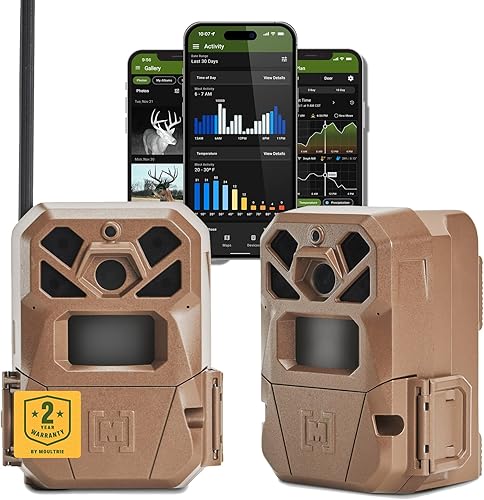
Two cameras and cellular delivery suit hunters who want to cover more than one trail or property area. Live Aim helps preview each camera's view before placement.
Pros
- Two cameras in the pack
- Buck detection and instant alerts
- Live Aim and built-in GPS
Cons
- Cellular service and a plan are needed for remote delivery
- Compatible rechargeable packs and solar panels are separate
The Edge 3 two-pack suits hunters who want to watch separate trails or property areas from one app. Its four-carrier auto-connect is designed to select the strongest of four major U.S. networks, while Live Aim lets you preview each camera's view during placement.
It captures 40MP photos and 1080p HD video, with low-glow infrared flash. Moultrie AI identifies buck images and can send alerts, which may help you decide when to check a location.
Built-in GPS maps each camera, and the app can show battery status. Compatible EDGE Series lithium battery packs and solar panels offer other power options, but are separate purchases.
Choose this pack if remote delivery matters and cellular service is available at both locations. Skip it if you want to avoid plans or don't need two cameras; check coverage and plan options before relying on alerts.
Tactacam Reveal X 3.0 Cellular Trail Camera: Best for simple cellular activation
- AT&T and Verizon auto-connect
- Built-in GPS and 32GB storage
- Sub-half-second trigger
- 3-shot burst mode
The pre-installed antenna and SIM, along with app setup, make this a straightforward cellular pick. Built-in storage means a separate SD card isn't needed.
Pros
- Pre-installed antenna and SIM
- Built-in GPS
- 3-shot burst mode
Cons
- Remote photo delivery depends on cellular coverage
- Optional power accessories are separate
The Reveal X 3.0 is a straightforward option for a hunter adding one cellular camera. Its antenna and SIM come pre-installed, and it has built-in GPS and 32GB storage, so you don't need a separate SD card.
It captures 4K photos and 1080p video, with a sub-half-second trigger and 3-shot burst mode. Three photos per trigger give a moving animal more chances to appear clearly across the sequence.
Tactacam says the camera auto-connects between AT&T and Verizon. The useful carrier depends on service at your specific camera location.
Choose the X 3.0 for app access, simple activation and built-in storage. Skip it if you don't need remote delivery or your planned site has no usable cellular coverage; our guide to cellular camera plans and carriers explains what to check.
SPYPOINT Flex-M Twin Cellular Trail Cameras: Best for spreading cameras
- Two cameras
- Dual-SIM cross-carrier coverage
- 32MP photos and 1080p video with sound
- Remote app management
The twin pack helps spread cellular scouting across two routes. Remote management and GPS location in the SPYPOINT app can reduce trips to the cameras.
Pros
- Two cameras in the pack
- Cross-carrier coverage
- Remote management and GPS locator
Cons
- SD cards are sold separately
- Rechargeable LIT-22 battery pack is not included
SPYPOINT's Flex-M twin pack is for hunters who want cellular cameras on two routes. The cameras send photos and video to the SPYPOINT app, and dual-SIM technology connects to the strongest available carrier.
SPYPOINT describes 32MP photos and 1080p video with sound in its feature information, while its specifications show different resolution figures. If capture resolution is a deciding factor, confirm the camera's settings before buying.
Remote management and app GPS can help you check camera status without walking to each site. Each camera needs an SD card, and the rechargeable LIT-22 battery pack is optional.
Choose the twin pack when two cellular viewpoints matter more than built-in storage. Skip it if you want to avoid handling memory cards or only need one camera, and check coverage at both locations.
GardePro E5S Non-Cellular Trail Camera: Best for local card checks
- 64MP photos and 1296P HD video
- 0.1-second trigger
- No cellular or WiFi connection
- 8 AA batteries, not included
The E5S records locally for hunters who are comfortable retrieving an SD card. Its standalone design avoids cellular setup and remote service.
Pros
- Fast 0.1-second trigger
- No-glow night vision
- Supports a compatible solar panel
Cons
- No remote photo delivery
- SD card and batteries are not included
The GardePro E5S suits hunters who want straightforward local recording. It has no cellular or WiFi connection, so you'll retrieve an SD card in person to review footage.
It captures 64MP photos and 1296P video, with a 0.1-second trigger. The camera uses 8 AA batteries and supports a compatible solar panel; batteries and the SD card are separate.
The no-glow night vision is useful when you want infrared illumination without visible light. Plan visits around the camera's activity and storage needs, especially if you record frequent video.
Choose the E5S if you prefer a simple local setup and can check it regularly. Skip it if you need alerts from a distant property, and see our guide to securing a trail camera from theft before leaving equipment in place.
Moultrie Edge 2 Cellular Trail Camera: Best for app-based pattern review
- 36MP photos and 1080p HD video with audio
- 8GB internal memory
- Multi-carrier cellular access
- Game Plan and activity charting
This camera combines app delivery with internal memory, so an SD card isn't required. Moultrie's app includes activity charts and mapping tools for reviewing movement.
Pros
- 8GB built-in memory
- 100-foot detection range
- App tools for activity and maps
Cons
- Cellular plans are separate
- Compatible power accessories are sold separately
The Moultrie Edge 2 combines cellular app access with internal memory, so an SD card isn't required. It has 8GB built-in memory, plus unlimited cloud storage in the Moultrie Mobile app.
It captures 36MP photos and 1080p HD video with audio, using low-glow infrared flash. The app's activity charting, maps and Game Plan tools can help you review movement and manage camera locations.
The camera has a 100-foot detection range and multi-carrier access. Moultrie data plans start at 9 dollars.99 a month, so account for a plan when deciding whether app delivery fits your budget.
Choose the Edge 2 if internal storage and app-based pattern review suit your routine. Skip it if you want a camera with no recurring service; the Moultrie Edge 2 cellular camera review has more model detail.
Tactacam Reveal Ultra Cellular Trail Camera: Best for live remote viewing
- Live video and HD photo requests
- Active GPS tracking
- Switchable no-glow and low-glow flash
- 16GB internal storage and SD card slot
Live video and on-demand photo requests help check activity remotely. Active GPS tracking can send an alert if the camera moves more than a half-mile from its last known location.
Pros
- Live video and photo requests
- Switchable flash settings
- Internal storage plus SD card slot
Cons
- Cellular coverage is needed for remote features
- More features may be unnecessary for basic scouting
The Reveal Ultra is for hunters who want to check a location remotely in more than one way. Cellular features include live video, on-demand HD photo requests and active GPS tracking, which can send an alert if the camera moves more than a half-mile from its last known location.
You can switch between no-glow and low-glow infrared flash. The camera has 16GB of internal storage and an SD card slot, giving you both built-in and removable storage options.
It captures 4K still images and 2.5K video, with a sub-0.5-second trigger and up to 9-shot burst mode. This range of features adds little for a hunter who only needs occasional still images.
Choose the Reveal Ultra when live viewing and location tracking help solve a real scouting problem. Skip it for basic monitoring, and read our guide to no-glow versus low-glow trail cameras if flash visibility is a key concern.
Meidase P70 Non-Cellular Trail Camera: Best for on-camera photo review
- 64MP photos and 1296p HD video
- 0.1-second trigger
- 100-foot no-glow night vision
- 2.4-inch color display
The P70 keeps scouting local, with a display for reviewing footage at the camera. Its no-glow night vision suits hunters who want to avoid visible illumination.
Pros
- 0.1-second trigger
- No-glow night vision
- On-camera color display
Cons
- SD card and batteries are not included
- Footage must be retrieved locally
The Meidase P70 is a local-recording choice for hunters who want to review footage at the camera. Its 2.4-inch color display and controls let you check photos and video in the field without connecting a phone.
It captures 64MP photos and 1296p video, with no-glow infrared night vision reaching up to 100 ft. It needs 8 AA batteries and a full-size SD card, both sold separately.
The P70 supports an optional compatible solar panel. Battery life will vary with trigger activity and settings, so check footage and power when you visit.
Choose it if an on-camera display is useful and you don't need remote alerts. Skip it if visiting the camera is difficult; our guide to trail camera batteries and power choices can help you plan for longer deployments.
SPYPOINT Flex-S Dark Solar Cellular Camera: Best for built-in solar charging
- Built-in solar panel and internal battery
- 40MP photos and 1080p video with sound
- No-glow night vision
- Live streaming and on-demand requests
Built-in solar charging can reduce battery changes for a cellular camera placed where the panel can get sun. Remote viewing and no-glow settings add flexibility for scouting.
Pros
- Built-in solar panel
- No-glow and low-glow settings
- Free photo plan includes 100 photos per month
Cons
- Solar performance depends on use and available sunlight
- MicroSD card is sold separately
The SPYPOINT Flex-S Dark combines cellular reporting with a built-in solar panel and internal battery. Solar charging can reduce routine battery changes when the panel receives enough sunlight, though runtime varies with use and conditions.
It captures 40MP photos and 1080p video with sound. No-glow night vision has a remote low-glow option, while the app supports on-demand requests and live streaming.
The camera connects to the strongest available carrier signal. SPYPOINT's free photo plan includes 100 photos per month; a microSD card is sold separately.
Choose this model if you want cellular scouting and solar power together. Skip it if your placement gets little sun or you don't want a cellular plan; compare other options in our best solar trail camera guide and cellular camera cost guide.
MAXDONE Solar WiFi Trail Camera: Best for nearby phone downloads
- Solar panel and 6000mAh rechargeable power
- 32GB SD card included
- Phone connection up to 33–50 ft in open areas
- No cellular service or real-time alerts
This camera records without a phone connection, then uses its own short-range hotspot for setup and downloads. It fits a nearby check-in routine, not remote alerts.
Pros
- Solar panel and rechargeable power
- 32GB SD card included
- No subscription or monthly fees
Cons
- No cellular connection or real-time notifications
- Phone downloads require being within range
The MAXDONE Solar WiFi Trail Camera suits a nearby check-in routine, not remote monitoring. It creates its own short-range hotspot for setup and downloads, and does not use home WiFi or cellular service.
A 32GB SD card is included, along with a solar panel and 6000mAh rechargeable power source. The camera continues recording while your phone is disconnected; you can use the TrailCamGO app within range to transfer files.
It captures 4K video and 64MP photos, with a 0.1-second trigger and infrared night vision. It also supports time-lapse, scheduled shooting and motion detection.
Choose it if you can visit the camera and connect your phone nearby, and want to avoid monthly fees. Skip it if you expect alerts when you're away; our guide to trail cameras that connect to a phone explains local and remote connections.
How should you choose a trail camera for deer?
Choose a camera by matching its connection and power setup to the place you'll install it. A feature is only useful when it fits your access, coverage and maintenance routine.
Is cellular or SD-card scouting better?
Cellular scouting is better when you want updates without visiting the camera and the location has usable service. A standard SD-card camera fits a hunter who can retrieve images in person and wants no cellular plan.
Some WiFi cameras make a short-range connection directly to a phone. That lets you download files nearby, but it doesn't provide internet service or alerts while you're away.
How much do trigger speed and burst mode matter?
A fast trigger or burst mode can help capture a deer moving through the detection area. The GardePro E5S and Meidase P70 list a 0.1-second trigger, while several cellular picks offer burst capture.
Neither feature fixes poor aim or an obstructed view. Point the camera across the route, clear nearby branches and check the framing before leaving the site.
Should you choose no-glow or low-glow flash?
No-glow infrared emits no visible light, while low-glow flash may show a faint red glow. Choose based on how discreet you want night illumination to be and which other camera features you need.
The Reveal Ultra has switchable flash settings, and the SPYPOINT Flex-S Dark can switch remotely between no-glow and low-glow. For more detail, see our guide to no-glow and low-glow trail camera flash.
How should you plan power and storage?
Check the camera's power source and storage before you buy. The GardePro E5S and Meidase P70 need separate batteries and SD cards, while several cellular models have built-in memory.
Solar can reduce the need for battery changes, but placement and sunlight matter. Video, frequent motion triggers and remote uploads can also mean more maintenance, so match the camera's options to how often you can visit.
How do you set up a deer trail camera?
Set up the camera before you depend on it for scouting, then confirm that it records and sends images as expected. A short check at the site can prevent a long gap in coverage.
Start by choosing a route or crossing where deer movement is likely, and aim the camera across that path. Secure the strap or mount, keep branches clear of the detection area and use Live Aim or the camera's screen when available to check the frame.
Install the required batteries and memory card, or activate the cellular app if the camera uses one. Follow the camera's setup instructions, then take a test photo and confirm that it appears on the SD card, phone or app as appropriate.
For cellular models, check signal and plan details at the actual location before leaving the camera for an extended period. For local cameras, confirm that the card is seated and that you can open the saved files.
What mistakes make trail camera scouting less useful?
The most common setup mistakes are poor framing, untested connections and a maintenance plan that doesn't match camera activity. Correct those before adding more cameras or changing models.
A camera aimed directly along a trail may catch an animal only as it passes close by. Aim across the route when possible, and make a test capture at the distance where you expect deer to appear.
Don't assume a camera's WiFi means you can check it from home. A short-range hotspot requires you to be nearby, while cellular delivery depends on usable service and a plan.
Finally, don't leave batteries, cards or solar exposure to chance. Check power and storage during visits, and adjust video or trigger settings if the camera fills its card or needs attention too often.
Which trail camera is best for your deer hunting setup?
Choose the Moultrie Edge 3 if you want two cellular cameras, app alerts and buck detection. Choose the GardePro E5S or Meidase P70 for local SD-card checks, the Reveal X 3.0 for simple cellular activation, or the SPYPOINT Flex-S Dark when built-in solar charging matters.
Before you install a camera, use our guide to where to place trail cameras to plan the view and access route. If you're deciding how much coverage to build, see how many trail cameras you need per acre.
Our top 3 picks at a glance
-
1
Best for two-route cellular scouting
Moultrie Edge 3 Cellular Trail Camera 2-Pack
9.2/10 our score
See it on Amazon -
2
Best for simple cellular activation
Tactacam Reveal X 3.0 Cellular Trail Camera
9.0/10 our score
See it on Amazon -
3
Best for spreading cameras
SPYPOINT Flex-M Twin Cellular Trail Cameras
8.8/10 our score
See it on Amazon
Frequently asked questions
Do deer hunters need a cellular trail camera?
No. A cellular camera sends photos through a mobile network, which can help you check activity without visiting the site.
A standard camera records to an SD card and requires an in-person visit to retrieve images.
Choose based on coverage, plan costs and how often you can check each camera.
Are cellular trail cameras worth it for deer hunting?
They can be useful when a camera sits far from home or you want to check movement without entering the area. The benefit depends on cellular coverage and your willingness to pay for a plan.
Our cellular trail camera guide explains carriers, plans and camera choices.
Can a trail camera connect to a phone without cellular service?
Some cameras create a short-range WiFi hotspot so you can connect nearby and download photos. That does not provide internet service or alerts while you're away.
See how trail cameras connect to phones to compare local WiFi, cellular and SD-card options.
Where should you place a trail camera for deer?
Place it where deer naturally travel, such as a trail crossing or the edge of a feeding area, and aim it to capture the direction of movement. Check local rules and avoid disturbing bedding areas.
Our guide to trail camera placement for deer covers height, angle and access.
How many trail cameras should you use?
The right number depends on the size of the property, the number of travel routes you want to watch and how often you can maintain each camera. Start with key locations, then add cameras where they answer a clear scouting question.
Read how many trail cameras to use per acre for a planning guide.