Do Deer Notice Ground Blinds?
Yes, deer can see ground blinds when the blind stands out, moves, or appears suddenly. Choose a setup that fits the site, break up its outline, and plan your entry and movements before hunting.
On this page (8 sections)
- Do deer see ground blinds, and what makes them notice one?
- How should you choose a ground blind to avoid being noticed?
- Where should you set up a ground blind?
- How do you set up a ground blind for better concealment?
- What common mistakes make a blind easier for deer to notice?
- How can you tell if deer have noticed the blind?
- Do deer notice ground blinds at night?
- Which ground blind setup should you choose?
Yes, deer can see ground blinds when a blind stands out against its background or reveals movement through an opening. To make a blind less noticeable, set it up early, place it against natural cover, and plan your entry and movements before hunting.
A blind provides cover, but it doesn't make you invisible. A sudden change to the area, a shifting silhouette, noise, or a poor position can all draw attention.
Do deer see ground blinds, and what makes them notice one?
Deer can see a blind when its shape or color contrasts with the surroundings. Camo can break up the outline, but it won't hide a boxy shape against an open skyline or bare field.
Consider the view from the routes deer use, not just how the spot looks from your entry path. A bright panel, open window, or person moving behind mesh may be more noticeable than the camouflage pattern.
A new blind can also change how deer use a place. Set it up as early as practical, then watch whether deer pause, avoid the spot, or approach from another direction.
Can deer see movement through ground blind windows?
Movement at a window can draw attention even when the blind itself blends in. Sit back from openings, move slowly, and open only the windows you need.
Avoid sitting in front of a bright window where your body can make a clear outline. Choose the window positions before deer are nearby, and arrange your gear so you won't need to shuffle or reach around during the hunt.
Do sound and scent give away a ground blind?
A zipper or shifting gear can make noise, and your visits can leave scent in the area. Practice with the windows before hunting, keep loose items from knocking together, and pay attention to wind direction when approaching.
Keep setup visits brief and follow the scent-control steps you already use. A quiet, well-hidden blind can still draw attention if you repeatedly disturb the area around it.
How should you choose a ground blind to avoid being noticed?
Choose features that solve the main concealment problem at your site. Consider where deer approach, how many people need room, how you want to manage windows, and whether you need a portable pop-up blind or extra cover for an existing setup.
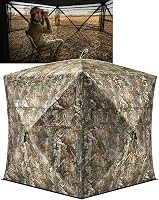
The TIDEWE 270 Degree See-Through Hunting Blind suits hunters who want a wide view and brush-in loops for adding natural cover. It comes in sizes for 1 to 4 hunters, so check the floor space and hub-to-hub dimensions against your group and site.
Skip it if your spot has no room for its footprint or you don't need the wider view.
TIDEWE describes the blind as water-resistant, not fully waterproof. Its pop-up design, carrying bag, metal hub, reinforced corners, and fiberglass poles may suit hunters who need a portable blind for changing conditions, but no blind should be treated as a substitute for checking the weather and securing the setup.
The Ameristep Doghouse Run and Gun fits a two-person setup where a spring-steel blind with multiple window options and a dark interior is useful. Its ShadowGuard interior is designed to reduce shadows and silhouettes.
Skip it if you need room for more than two hunters or want a wide see-through mesh view.
The Allen Company Camo Netting is a flexible choice when you already have a blind and want to soften a viewing port. It measures 12 ft by 56 in and is made from fine mesh.
Skip it if you need a complete blind, or if adding netting would block your view or safe shooting lane.
Where should you set up a ground blind?
Place the blind against natural cover where you can enter with minimal disturbance. Check the wind, deer travel, sight lines, and safe shooting lanes before settling on a spot.
Avoid putting the blind directly on a trail or where deer must pass close to it. Choose a position that lets you see the area without opening every window, and keep your approach out of the most active travel route when possible.
Size matters because a blind must fit the site without crowding the route or changing the view more than necessary. Use our guide to how big a hunting blind should be to compare capacity with available space, and read what to know before you buy a hunting blind for broader fit advice.
When should you put up a ground blind?
Set up the blind as early as access and local rules allow. A blind placed well before the hunt gives deer more time to encounter the changed surroundings.
Keep the installation brief and avoid unnecessary visits. For timing advice, see when to set up a ground blind, and use ground blind staking guidance to secure it without leaving a loose or noisy setup.
How do you set up a ground blind for better concealment?
Break up straight edges with cover that matches the site, then check the result from likely approach angles. Use brush-in loops if the blind has them, and keep the entry, windows, and shooting lanes clear.
Don't cut vegetation where local rules prohibit it or add so much cover that the blind becomes difficult to use. Check that fabric and netting sit quietly, don't reflect light, and won't shift into a window or lane.
Before hunting, test the door and window positions from your seat. Confirm that the blind is stable, your view is clear, and your gear is within reach so you won't need to make sudden movements.
What common mistakes make a blind easier for deer to notice?
The most common mistakes are poor placement, a rushed setup, and visible movement at an opening. Fix those before adding more camouflage or equipment.
Avoid setting the blind on a skyline, leaving a bright window open, or sitting directly against mesh. Don't repeatedly move the blind after deer begin using the area unless weather, safety, or local rules require it.
A blind can also become more conspicuous if added netting or brush blocks the view, catches light, or moves in the wind. Check the full setup from the direction deer are likely to approach.
How can you tell if deer have noticed the blind?
Look for changes in how deer approach and use the area after setup. Tracks, trails, and camera images can help you compare activity, though one quiet visit doesn't prove deer have abandoned the spot.
A camera can record whether deer pause, turn away, or use another route. Keep visits and camera placement from adding more disturbance; where to place trail cameras explains how to monitor an approach without pointing a camera into the blind's windows.
Do deer notice ground blinds at night?
Deer can notice a blind at night, especially if it stands out or shows light and movement through an opening. Darkness doesn't make an exposed blind undetectable.
Keep lights low and directed away from windows when preparing in the dark. Follow local rules on lighting and access, and avoid making noise while entering or adjusting the setup.
Which ground blind setup should you choose?
Choose the setup that addresses the problem at your site. Pick the TIDEWE if you need a portable blind with a wide view and brush-in loops; choose the Ameristep for a two-person blind with a dark interior; add Allen Company netting when a viewing port needs cover.
Skip any option whose size or features don't match the space and view you need.
Deer can see ground blinds, but careful placement, early setup, and controlled movement can make one less conspicuous. For more help, read our hunting blind guide and how to stake down a ground blind.
Frequently asked questions
Can deer see through a ground blind?
Deer may see movement through open windows or mesh, especially when the inside is brighter than the area outside. Keep openings closed or covered until you need them, sit back from them, and avoid moving against a bright opening.
One-way mesh gives you a view out, but it doesn't make movement invisible.
How long should a ground blind sit before hunting?
Set up a ground blind as early as access and local rules allow, ideally well before you plan to hunt from it. That gives deer time to encounter the changed surroundings before you enter.
The right interval depends on the location, hunting pressure, and how often deer use the route.
Should you brush in a ground blind?
Yes, when you can add natural cover without damaging the blind or changing the area too much. Use nearby material to break up straight edges, and keep the door, windows, and shooting lanes clear.
Brush-in loops can hold cover in place without piling branches against the fabric.
Where should you put a ground blind for deer?
Choose a spot with a useful view of the route or area you want to watch and an entry path that causes little disturbance. Check wind direction, background cover, shooting lanes, and local access rules before setting up.
Avoid blocking trails or putting the blind where deer must pass close by.