How Big Should a Hunting Blind Be?
For how big a hunting blind should be, choose one that fits each hunter, seat, and essential gear with room to move and use the windows. Compare the footprint and usable height with your group before choosing by capacity.
On this page (9 sections)
- How big should a hunting blind be for your group?
- How much extra space do seats and gear need?
- How tall should a hunting blind be?
- What footprint works for three or four hunters?
- How do windows affect the size you need?
- What should you measure before choosing a blind?
- How do you set up and care for a pop-up blind?
- What mistakes make a blind feel too small?
- Which hunting blind size should you choose?
For how big a hunting blind should be, start with the number of people, then add their seats, essential gear, and room to move. The footprint and interior height matter more than a capacity label by itself.
A blind that fits on paper can feel cramped once everyone is seated in bulky clothing. Before you choose, check that each person can sit, turn, reach a window, and enter or exit without shifting someone else's gear.
How big should a hunting blind be for your group?
Choose a blind that fits your group in its real seating arrangement. A solo hunter may want a compact footprint, while two or more people need room for seats, gear, and quiet movement.
Capacity labels help narrow the options, but they don't show how much elbow room you'll have. Compare the listed base dimensions with the space you need at the hunting site.
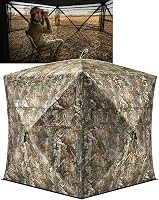
The Lenotos 270 Degree Pop-Up Blind, 1 to 2 Person measures 60 x 60 in at the base and 64 in high. Its semicircle windows provide multiple viewing and archery angles.
The Lenotos 2-Person 360 See-Through Pop-Up Blind has a 55 x 55 in base and 65 in of interior center height. Four see-through mesh panels offer views around the blind.
Both are sized for one or two people, but neither leaves unlimited space for extra gear. Measure your chairs and packs to see whether the tighter footprint will work for your setup.
How much extra space do seats and gear need?
Count the space your seats and essential gear occupy before settling on a footprint. Each hunter needs room to sit, turn, and reach a window without striking another person.
Mark the blind's dimensions at your intended site with tape, cord, or stakes. Put your chairs and packs inside that outline, then sit down and check whether everyone can shift position and use the openings.
Keep only the gear you'll need within reach inside the blind. A large pack or spare equipment can take up floor area that the capacity label doesn't account for.
For a broader overview of styles and buying factors, read hunting blinds: what to know before you buy. If concealment is part of your choice, see whether deer notice ground blinds.
How tall should a hunting blind be?
Pick a height that lets you sit naturally and use your chosen window. Check whether the stated measurement is the center height or overall height, because those dimensions describe different clearance.
The Lenotos 270 Degree model is 64 in high, while the Lenotos 360 model has a 65 in interior center height. Compare those figures with your seated posture, chair, and headwear.
A taller center doesn't mean the entire interior has the same clearance. Roof shape and window placement affect where you can sit and how easily you can reach an opening.
What footprint works for three or four hunters?
Larger groups generally need more floor area and a layout that gives everyone room to move. Compare the dimensions and think about whether hunters can use the windows without reaching across one another.
The Ameristep Brickhouse 3-Person Ground Blind measures 67 x 59 in and is described for up to three hunters. Its 10 windows include shoot-through mesh openings and gun ports.
The Barronett Feather Five measures 84 x 84 in and 72 in high, with capacity for four people. Two vertical corner doors let an entire wall panel flip up to make loading gear easier.
A stated capacity doesn't guarantee comfortable movement for everyone. Mark the footprint and fit your seats and packs inside before taking the blind into the field.
How do windows affect the size you need?
Choose a window layout that gives each hunter access to useful viewing or shooting angles. Floor area alone won't solve a cramped setup if people have to reach across one another to use an opening.
For a shared blind, compare the window positions with your planned seats. Consider how you'll open or adjust them without disturbing another hunter.
A solo hunter can focus on the sides facing likely approaches or shooting lanes. For help choosing a site and timing, read when to set up a ground blind.
What should you measure before choosing a blind?
Measure the available site, your seat footprint, and your seated height before buying. Compare those figures with the blind's base and height dimensions.
Check for nearby trees, brush, and uneven ground that could limit the blind's shape or block the door. Leave space to enter and exit without moving equipment or brushing against the fabric.
Plan how you'll secure the blind in its location. The guide to staking down a ground blind covers tie-downs and placement.
How do you set up and care for a pop-up blind?
Practice opening and folding a pop-up blind before you take it to your hunting spot. These frames spring open under tension, so choose a clear area and follow the brand's setup directions.
The Lenotos 270 Degree model uses a compressed coil-steel frame and comes with a carrying case, tie-downs, and ground stakes. The 360 model includes four ropes and eight stakes, and is designed for setup in about 60 seconds after removal from its bag.
Keep the door and windows clear of seats and packs so people can enter and adjust openings without snagging gear. Use the supplied tie-downs and stakes as directed, especially where wind could move the fabric.
For care, follow the product's instructions and let the blind dry before storing it if it gets wet. Pack it in its case after folding it correctly, and check the frame, seams, and stakes before the next outing.
What mistakes make a blind feel too small?
The most common sizing mistake is choosing by the person count alone. A two-person label doesn't account for bulky clothes, seat width, packs, or how much room each hunter needs to turn.
Another mistake is comparing only the base dimensions. Interior height, roof shape, window positions, and door clearance all affect whether the blind suits your posture and setup.
Don't bring every piece of gear inside by default. Lay out what must stay within reach, then leave bulky or unused items outside if your hunting plan allows.
Which hunting blind size should you choose?
Choose the smallest footprint that comfortably fits your people, seats, gear, and window positions. A compact blind is easier to place when space is tight, while a bigger group or gear-heavy setup benefits from more floor area.
For one hunter or a close pair, compare the Lenotos models by footprint and viewing layout: the 60 x 60 in blind has semicircle windows, while the 55 x 55 in option has four see-through panels. Skip either compact choice if your seat and gear test leaves no room to shift.
For three hunters who want multiple openings, consider the Ameristep Brickhouse. For four people or a group that needs more floor space, the Barronett Feather Five is the clearest fit; skip the larger blind if its footprint won't fit your site.
Before deciding how big a hunting blind should be, mark the base and fit your actual seats and gear inside it. Use hunting blinds: what to know before you buy if you still need to compare blind styles.
Frequently asked questions
How much room should a hunting blind have per person?
Plan space for each person, their seat, clothing, and the gear they need inside, with enough clearance to turn and reach a window. The best footprint depends on how you sit and how much you bring.
Mark the blind's base on the ground and arrange your actual seats and packs inside it before choosing.
Is a 2-person hunting blind big enough for 2 adults?
It can fit two adults if its floor area works with their seats and essential gear. Compare the interior footprint, not just the capacity label, and consider whether both people can move without bumping into each other.
If you use bulky equipment or want extra room to shift, compare a larger blind.
How tall should a ground blind be?
Choose enough interior height for your seated posture, headwear, and shooting position. Check whether the measurement is the center height or another dimension, since a sloped roof can reduce clearance near the sides.
Compare the height with your chair and the window you'll use.
What size hunting blind works for a group?
For a group, compare the actual floor dimensions with the space needed for every seat, person, and shared piece of gear. A 3-person label doesn't tell you how freely three people can move or reach the windows.
A larger footprint can suit groups that need more elbow room or separate shooting angles.