Hunting Blinds: What to Know Before You Buy
Choose a hunting blind by matching its floor space, windows and setup to your hunting style and location. Compare the actual footprint, entry, shooting openings, weather limits and included anchors before you buy.
On this page (10 sections)
- What should you check before buying a hunting blind?
- How much space does a hunting blind need?
- Which windows suit your hunting style?
- Do portable hunting blinds need stakes and tie-downs?
- Are pop-up blinds easy to carry and set up?
- What should you know about weather and concealment?
- Which hunting blind fits each setup?
- How do you compare hunting blind dimensions?
- What common hunting blind buying mistakes should you avoid?
- How should you choose a hunting blind?
A hunting blind should fit your hunting style, group size and location. Before you buy, compare usable space, viewing and shooting openings, entry, setup method and ways to secure it.
Portable ground blinds vary in room, window layout and how easily you can carry them to a site. A compact option may suit a mobile solo hunter or pair, while a larger blind can leave more space for people, seats and gear.
What should you check before buying a hunting blind?
Start with space, visibility and setup, because those decide whether the blind fits your hunting spot and how you plan to use it. Then check its weather limits and what you need to secure it.
| Check | What to compare |
|---|---|
| Capacity | Floor dimensions and room for seats and gear |
| Visibility | Window layout, mesh type and viewing direction |
| Shooting access | Opening size and any limits on shoot-through mesh |
| Setup | Pop-up or other design, plus setup and takedown steps |
| Stability | Included stakes, straps, ropes or tie-downs |
| Portability | Packed size, carry bag and weight, when available |
| Weather | Materials and stated weather limits |
Treat capacity labels as a starting point. Two people need room to sit, move and manage equipment, so compare floor dimensions instead of relying only on a person count.
Make a short list before comparing models: how many people will sit inside, what equipment will be brought in, which direction needs a view, and how far the blind must be carried. That helps rule out options whose main feature does not solve your actual problem.
How much space does a hunting blind need?
Choose a hunting blind with enough floor area for everyone and their gear, then confirm that its outside footprint fits the site. Dimensions can describe different measurements, so check whether a number refers to floor space, hub-to-hub span or the overall size.
The TIDEWE blind comes in 3 sizes for 1 to 4 hunters. Floor areas range from 55.5 x 55.5 in to 70.5 x 70.5 in, and height ranges from 65.5 in to 80.5 in.
The Barronett Feather Five is a five-sided blind measuring 84 x 84 x 72 in. Its 2 vertical corner doors let you flip up a full wall panel to load gear.
Measure chairs and the widest pieces of gear before choosing. Leave enough room to enter and move without brushing windows or shifting the blind.
For a one-person setup, the AUSCAMOTEK pairs its blind with a built-in chair. It is designed for one hunter, so consider whether that fixed solo arrangement and the available site space suit your plans.
A larger floor plan is useful only if you can place and anchor it where you intend to hunt. Mark the footprint on the ground at the planned site, then check that you can open doors, reach windows and move into position.
Which windows suit your hunting style?
Pick windows based on where you need to see and how you plan to take a shot. A wide viewing panel and a shooting opening serve different purposes, so check both.
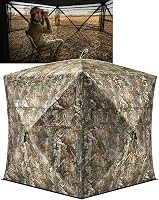
The TIDEWE has three full panels of one-way see-through mesh and three sides of sliding windows. Its design offers a 270-degree view, while brush-in loops and camo fabric are intended to help it blend into the surroundings.
The Ameristep Doghouse has multiple windows with shoot-through mesh, plus gun ports. Those opening types offer choices for different angles, but check that they work with your equipment and planned position.
Barronett specifies its shoot-through mesh for broadhead use only. It also has zipperless windows and rear peek windows, so compare its opening layout with your intended use before setting it up.
Do not assume all mesh is suitable for every shot. Follow the blind's instructions and check that your equipment and shooting angle are compatible.
Before a hunt, open and close each window from the position you expect to use. Check whether you can reach the opening quietly and maintain a clear path for equipment without moving the chair or shifting the blind.
Do portable hunting blinds need stakes and tie-downs?
Secure a portable blind with the right stakes and tie-downs for the ground and conditions. Check what comes with it, then plan for anything you still need.
The Ameristep Doghouse package includes tie-downs and ground stakes. Barronett includes ground stakes and tie-down ropes, while the TIDEWE includes straps and ground nails.
AUSCAMOTEK lists a blind and chair as included components, but does not specify stakes or tie-downs. Confirm the anchoring plan before heading out.
Ground conditions change what works. Follow the blind's instructions, use its available anchor points and check the setup if wind or weather shifts.
For a step-by-step look at anchoring, see how to stake down a ground blind. If you place a trail camera nearby, where to place trail cameras can help you think through camera position separately.
After a hunt, check the anchors before packing the blind away. Remove dirt and moisture, let fabric dry before storage, and keep stakes and tie-downs with the carrying bag so the next setup is complete.
Are pop-up blinds easy to carry and set up?
A pop-up design can make setup and transport simpler, but packed size, weight and carry gear still matter. Check how the blind folds and whether you can carry it to your intended location.
TIDEWE describes its blind as a pop-up design and includes a carrying bag. Ameristep's Doghouse uses a spring steel design and comes with a backpack carrying case; Barronett also includes a carry bag.
AUSCAMOTEK describes its blind as lightweight and foldable, and includes a carry bag. It also has a built-in chair, so consider the complete setup when comparing what you will carry.
Practice setup before a hunt. This gives you time to learn the openings, check the fit and identify any missing anchors without rushing at the site.
When you arrive, choose the position before unfolding the blind. Clear loose branches or other obstructions from the footprint, orient the windows toward the areas you need to view, then anchor the frame as directed.
Take it down in the order the instructions specify. Forcing a spring frame or folding it against its natural direction can make packing harder and put stress on the frame or fabric.
What should you know about weather and concealment?
Choose a blind with features that fit the conditions you expect, and plan around stated limits. No fabric or frame makes a blind safe in every storm or wind.
TIDEWE says its metal hub, reinforced corners, straps and 10 mm fiberglass poles are designed to withstand rain, snow and high winds. The blind is water-resistant, not fully waterproof, so plan for wet conditions accordingly.
Ameristep describes a matte outer fabric and a dark interior coating intended to reduce visible shadows and silhouettes. Barronett includes detachable blaze orange safety panels for use during gun season.
Camo patterns and brush-in loops can help a blind blend into a site, but placement and movement still matter. Read do deer see ground blinds for factors that can affect concealment.
Do not leave a blind in place through weather beyond its stated limits. After use, inspect the fabric, seams, frame and anchors for damage, and let damp material dry before storing it.
Which hunting blind fits each setup?
Match the blind to the number of hunters, space available and opening layout. Each of these options suits a different kind of setup, so start with the feature you need most.
TIDEWE hunting blind: a wide view in 3 sizes
The TIDEWE suits hunters who want multiple see-through panels and a choice of 3 sizes. Its sliding windows and brush-in loops add options for adjusting the setup and blending the blind into the terrain.
Choose it if you want to compare floor space from 55.5 x 55.5 in to 70.5 x 70.5 in. Skip it if you need a fully waterproof blind or want one fixed model with a known footprint without choosing among sizes.
Ameristep hunting blind: a compact blind for 2
The Ameristep Doghouse is designed to conceal two hunters and has a 60 x 60 in footprint. Its spring steel design, backpack carrying case and included tie-downs and stakes make it a portable option to compare.
Its multiple windows, shoot-through mesh and gun ports give you several opening types. Choose it for a pair that values a carry case and included anchors; skip it if you need the larger floor area of a group blind.
Barronett hunting blind: more space for a group
The Barronett Feather Five offers a five-sided shape and an 84 x 84 in footprint. Its 2 corner doors can flip up a full wall panel, which can make loading gear easier.
Choose it when extra room and gear access matter more than a smaller carry setup. Its shoot-through mesh is specified for broadhead use only, so skip it if that restriction does not fit your planned equipment.
AUSCAMOTEK hunting blind: a solo setup with a chair
The AUSCAMOTEK is designed for one person and includes a built-in chair. Its see-through fabric and pop-up design give solo hunters a combined blind and seat to consider.
Choose it if you hunt alone and want a chair included. Skip it if you need room for a second hunter or want confirmed dimensions and anchoring gear before deciding.
How do you compare hunting blind dimensions?
Compare the floor footprint, height and packed size as separate measurements. One dimension alone cannot tell you whether the blind will fit your site, hunters and equipment.
| Blind | Capacity or shape | Dimensions | Included carry or anchor items |
|---|---|---|---|
| TIDEWE | 1 to 4 hunters, depending on size | Floor: 55.5 x 55.5 in to 70.5 x 70.5 in; height: 65.5 to 80.5 in | Carrying bag, straps, ground nails |
| Ameristep Doghouse | 2 hunters | Footprint: 60 x 60 in; height: 66 in | Backpack case, tie-downs, ground stakes |
| Barronett Feather Five | Five-sided, 4-person model | 84 x 84 x 72 in | Carry bag, ground stakes, tie-down ropes |
| AUSCAMOTEK | 1 person | Dimensions not specified | Carry bag and built-in chair |
Dimensions can vary by size and by how a brand defines them. Check the specific size you plan to buy and confirm that the entrance, chair and gear fit inside.
If the blind needs to fit a particular spot, mark its footprint on the ground first. Leave room to open doors, reach windows and secure anchor points.
What common hunting blind buying mistakes should you avoid?
Avoid choosing by capacity label alone, assuming mesh suits every shot and forgetting how you will anchor the blind. A quick check of the real setup can prevent a poor fit.
A two-person label does not account for the size of chairs, packs or other gear. Compare floor dimensions and practice arranging your equipment before the hunt.
A wide viewing panel does not replace a clear shooting opening. Confirm the window types and any mesh restrictions for your intended equipment.
Do not assume every portable blind includes anchors. Check the components, carry what the setup requires and follow the instructions for securing it.
Finally, do not treat water resistance as waterproofing or a weather claim as permission to leave a blind up in any conditions. Use the blind within its stated limits and inspect it after use.
How should you choose a hunting blind?
Choose a hunting blind by starting with your group size and site, then compare the view, openings, carrying needs and anchoring. Pick the model whose dimensions and features match the setup you will actually use.
Pick the TIDEWE if you want three see-through panels and size options for different group needs. Choose the Ameristep Doghouse for a compact two-person setup with included tie-downs and stakes.
Choose the Barronett Feather Five when a larger five-sided space and gear-loading access matter most. Pick the AUSCAMOTEK for a solo setup where a built-in chair is useful.
For more options, compare our guides to best deer blinds, best ground blinds and hunting blinds for the money.
Frequently asked questions
What size hunting blind should I buy?
Choose a hunting blind with enough floor space for the people, seats and gear you plan to bring, then confirm the outside footprint fits your site. Compare inside floor dimensions rather than relying only on a capacity label, since chairs and equipment take room.
Measure your setup before you buy.
Are see-through hunting blinds worth it?
See-through mesh can give you a wider view from inside, but its usefulness depends on placement, light and how you move. Compare the viewing panels with the shooting openings you need, and follow the blind's guidance about the mesh and your equipment.
Do hunting blinds come with stakes?
Some portable hunting blinds include stakes and tie-downs, while others may not. Check the included components and plan for the ground and weather at your location.
A pop-up frame still needs to be secured according to its instructions.
Can you use shoot-through mesh with a bow?
Mesh guidance varies by blind. Barronett specifies its shoot-through mesh for broadhead use only, while other blinds have different window designs.
Check the instructions for your exact blind and equipment before taking a shot through mesh.
When should I set up a hunting blind?
Set up a hunting blind early enough to check its fit, secure it and let the surroundings settle before your hunt. Timing depends on the location, local rules and how much disturbance the setup causes.
Our guide to when to set up a ground blind covers the timing decision.