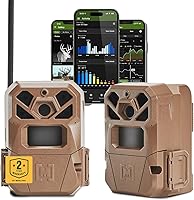
How Does a Cellular Game Camera Work?
A cellular game camera works by taking photos like a normal trail camera, then sending them over a built-in LTE connection to an app on your phone. You get the picture minutes after the trigger, without pulling an SD card or walking out to check.
On this page (9 sections)
- What are the main parts of a cellular game camera?
- How does a cellular game camera send pictures to your phone?
- How does the trigger and detection side work?
- How does the camera connect without Wi-Fi?
- How do data plans and photo volume affect the camera?
- How does battery life work in a cellular camera?
- What affects photo quality and upload speed?
- How do you set up and run a cellular game camera?
- What should you buy first?
A cellular game camera works by taking photos like a normal trail camera, then sending them over a built-in LTE connection to an app on your phone. You get the picture minutes after the trigger, without pulling an SD card or walking out to check.
That one change, a camera that uploads on its own, is what makes these units different. How a cellular game camera works comes down to the trigger, the modem and the app, and each part has a real effect on battery life, data cost and how fast you see a buck.
What are the main parts of a cellular game camera?
A cellular game camera has five working parts: a motion sensor, a camera lens and image sensor, a cellular modem with a SIM card, a battery pack and a control app. Each part does one job, and a weak link in any of them shows up as missed photos or a dead camera.
The motion sensor, usually a passive infrared (PIR) detector, watches for body heat moving across its view. When it trips, the camera wakes from a low-power sleep, takes the photo and stores it.
The modem then compresses the shot and pushes it to the maker's cloud service over LTE.
The SIM card is the camera's phone number, so to speak. Many units ship with the SIM pre-installed and pre-activated, which is why setup takes minutes rather than a service visit.
The Tactacam Reveal X 3.0 arrives with the antenna and SIM already in place, and the app walks you through a QR scan.
How does a cellular game camera send pictures to your phone?
It uploads each photo over LTE to the brand's cloud, and the app pulls it down to your phone. The camera does not text you directly; the cloud sits in the middle and handles storage and delivery.
In practice, the trigger fires, the camera writes the image, and the modem sends a compressed copy. The app then shows a thumbnail with the time, date and camera name.
Full-resolution files can be requested later if the plan allows HD transfers.
This is also where data plans matter. A photo-heavy month on a 32 GB internal camera fills quickly, and video requests burn data faster than stills.
Buy a plan sized to your volume, or the camera goes quiet mid-season.
The Moultrie Edge 2 is a popular first cellular camera and our Moultrie Edge 2 review covers how its plan and app behave in the field. If you are still deciding between brands, the Stealth Cam vs Moultrie comparison breaks down the app and plan differences.
How does the trigger and detection side work?
The PIR sensor detects heat and motion, wakes the camera and fires the shutter, all in a fraction of a second on good models. Detection range and trigger speed decide whether you catch a walking buck or just its back end.
A wide field of view catches more ground but puts the animal smaller in the frame. The Reveal X 3.0 has a 60 degree field of view, which is a tighter, longer look.
A 3-shot burst mode fires three frames on one trigger, raising the odds of a clean, centered shot on fast game.
Mount the camera at chest height, angled slightly down a trail or scrape, and clear grass and branches from the sensor's path. False triggers from swaying vegetation drain batteries faster than any deer will.
How does the camera connect without Wi-Fi?
It uses a cellular modem and an activated SIM, the same LTE network your phone uses. There is no router, no home internet and no pairing to your house Wi-Fi.
Multi-carrier models are the practical answer for rural ground. The Reveal X 3.0 locks onto whichever carrier has the stronger signal at that exact spot, so you are not stuck with one network.
The Reveal Ultra connects automatically to major 4G LTE networks with no carrier setup.
Before you buy, check the carrier coverage map for the parcel, not the nearest town. Signal at the gate can be strong while the creek bottom is a dead zone.
A camera with a pre-installed antenna still needs bars to work.
How do data plans and photo volume affect the camera?
Every cellular camera needs an active data plan, and the plan size controls how many photos and videos it can send. Run out of data and the camera keeps shooting, but the images stop reaching your phone.
Plans usually come in monthly or yearly tiers, priced by photo count or by a flat rate. Video requests and HD images cost more than standard stills.
The Reveal Ultra offers several low-cost plan options, including on-demand video requests when you want extra field intel.
Match the plan to your habit. A scrape camera that fires 20 times a day needs more data than a bedding-area camera that fires twice.
Turn off burst mode or lower the photo resolution if the plan runs thin.
How does battery life work in a cellular camera?
Cellular uploads are the biggest battery draw, so these cameras need lithium AA cells or a solar setup to last a season. The modem waking to send a photo uses far more power than the shutter.
The Reveal X 3.0 is rated for up to 6+ months on a set of batteries in independent testing, and it accepts a lithium cartridge, solar panel or battery belt for longer deployments. The Reveal Ultra is also built for best-in-class battery life and runs for months on standard cells.
Cold weather cuts battery capacity, so a late-season camera in single-digit temperatures needs fresh lithium cells. Energizer Ultimate Lithium AAs are rated from -40F to 140°F and hold power up to 25 years in storage, which makes them the safe pick for a December camera.
What affects photo quality and upload speed?
Photo quality comes from the sensor and flash, while upload speed comes from signal strength and file size. Those are separate things, and a camera can be great at one and slow at the other.
The Reveal Ultra captures 4K stills and 2.5K video with a sub-0.5 second trigger and up to a 9-shot burst. It also switches between a 96 ft low-glow and an 80 ft no-glow infrared flash, so you can pick discreet night images or brighter ones.
The Reveal X 3.0 shoots 4K photos and 1080p video with infrared LED flash.
Upload speed depends on the bars at the camera and the size of the file. A compressed thumbnail arrives in seconds; an HD request takes longer.
If photos arrive hours late, move the camera or add an external antenna before blaming the camera.
Our Tactacam Reveal Pro review covers how the higher-end Reveal models handle HD requests and live view. For the bigger buying question, see are cellular trail cameras worth it before you commit to a plan.
How do you set up and run a cellular game camera?
Charge or load fresh batteries, scan the QR code in the app, pick a plan and mount the camera facing your target. Most hunters are live and receiving photos in under 10 minutes on a pre-activated model.
Start with the camera powered off and the SIM seated. Open the app, create the camera in your account and scan the code on the unit.
Choose a data plan and confirm the camera shows a signal.
Mount it at chest height on a tree or post, clear the sensor's view and run a test walk-through. Wait a few minutes for the first upload before you leave.
Then set the photo interval and burst count to match your data plan.
Use the app to check battery level and signal strength every few weeks. Pull the camera only to swap batteries or change the SD card, and download any full-resolution originals you want to keep.
For a review-focused look at one model's app, our Tactacam Reveal Pro 3.0 review is the place to start.
What should you buy first?
Buy a multi-carrier camera with a pre-installed SIM, then add lithium batteries and a plan sized to your photo volume. That combination gets you live photos in minutes and keeps the camera running through the season.
The Reveal X 3.0 is the strongest all-rounder here for most hunters, with auto-connect LTE on two carriers, built-in storage and a fast trigger. The Reveal Ultra is the pick for live video and 4K stills with a switchable flash.
Add Energizer Ultimate Lithium AAs for cold weather.
If your ground has no usable signal, skip cellular and run a standard SD card camera. If you are weighing a plan against a new camera, read are cellular trail cameras worth it and the Stealth Cam vs Moultrie comparison before you spend.
That is how a cellular game camera works: trigger, upload, app, and a plan that keeps the pictures coming.
Frequently asked questions
How does a cellular game camera work without Wi-Fi?
It uses a cellular modem inside the camera, the same kind of connection a phone uses. An activated SIM card on a data plan sends each photo or video over LTE to the maker's cloud service, which pushes it to your app.
No home Wi-Fi or router is involved.
Do cellular trail cameras need a data plan?
Yes. Each camera needs an active data plan, sold monthly or yearly, to send images.
The plan size should match your photo volume and video use.
Some plans charge extra for HD photo requests or live video, so read the tiers before you buy.
How long does a cellular game camera take to send a photo?
A few seconds to a couple of minutes in good signal. The camera triggers in under a second, then uploads the compressed image.
Weak signal, busy towers or large HD files slow the transfer.
A fast trigger does not mean a fast upload.
Do cellular cameras work in areas with no cell service?
No. The camera needs at least a weak LTE signal at the camera's exact spot to send photos.
Check the carrier map for that parcel before you buy.
If the whole property is a dead zone, a standard SD card camera is the better buy.
Can a cellular game camera send video?
Some can. Live video and on-demand clips are plan features on cameras built for them.
Most basic models send stills and short clips.
Video eats data and battery, so check the plan limits before relying on it.
Does a cellular game camera store photos on the camera too?
Many do. The Reveal X 3.0 has built-in storage and transfers photos to your phone without an SD card.
Other models keep an SD card for full-resolution originals while sending smaller versions over LTE.
Check which type you are buying.